
Quick Answer: Traditional aluminum siding consists of thin, roll-formed aluminium sheets installed in horizontal laps it was popular in the 1950s–1980s and is rarely installed new today. Aluminum composite panels (ACM/ACP) are a modern product: two aluminium face sheets bonded to a polyethylene core, creating a rigid, flat panel system used in contemporary cladding. Longboard is the leading residential ACM siding system in Canada. The two products look completely different and are used for different applications.
Key Takeaways:
- Core Structural Difference: Traditional aluminum siding uses thin, single-layer roll-formed metal sheets, whereas Aluminum Composite Material (ACM) features a thick, rigid multi-layer engineering layout with a polyethylene core bonded between two aluminum skins.
- Impact Resistance & Performance: Legacy aluminum siding is thin (0.019″ to 0.024″) and dents easily on impact, while residential ACM cladding like Longboard siding uses a 3mm composite buildup to completely eliminate surface denting.
- Aesthetic and Panel Length: Traditional siding mimics standard 12-foot horizontal wood laps. Modern ACM offers ultra-flat, architectural spans up to 24 feet featuring concealed clip fastener systems for clean, uninterrupted design profiles.
- Durability and Maintenance: Older aluminum cladding is prone to chalking, fading, and thermal expansion noise. Modern residential ACM utilizes premium PVDF factory coatings backed by 25-year fade warranties that do not rattle or buckle.
- Ottawa Cost Breakdown: While legacy aluminum siding is purely a budget replacement option, premium architectural ACM panel installation in Ottawa averages $22 to $35+ per square foot.
Why This Question Comes Up
When Ottawa homeowners start researching modern exterior materials, they often encounter both “aluminum siding” and “aluminum composite panels” in search results and it’s genuinely unclear from the names whether they’re the same thing, different grades of the same product, or entirely different materials.
Longboard aluminium composite siding is the relevant option for Ottawa homeowners today.
Traditional Aluminum Siding: What It Is
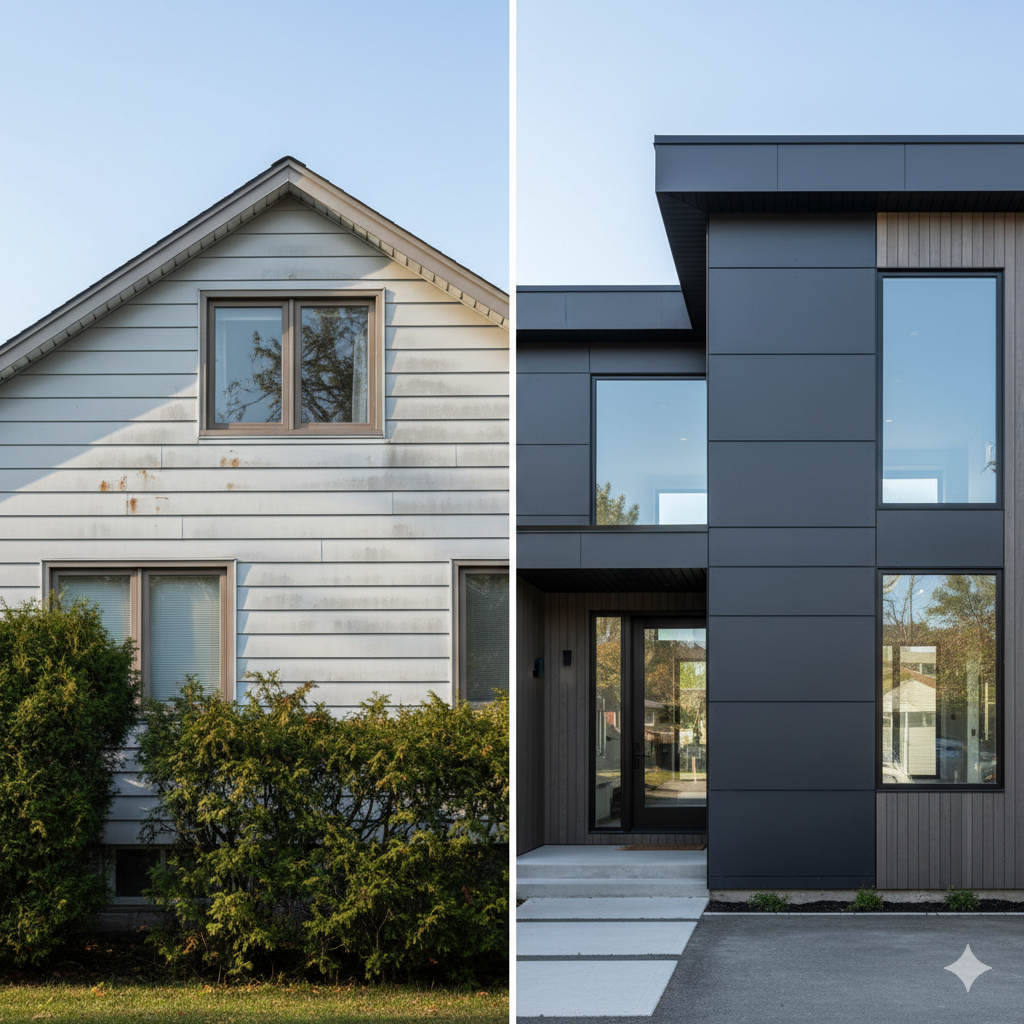
Traditional aluminum siding was the dominant exterior cladding material in Canada from roughly the 1950s through the 1980s. It’s made from roll-formed aluminium sheets, cut into horizontal laps and installed similarly to vinyl siding. If you’ve seen a bungalow with a corrugated, slightly shiny silver or painted horizontal exterior that dents when you touch it that’s traditional aluminum siding.
Characteristics of traditional aluminum siding
- Thin gauge: Typically 0.019″ to 0.024″ thick dents relatively easily on impact
- Horizontal lap profile: Mimics wood clapboard, installed from bottom to top
- Prone to chalking and fading: Paint finish degrades over time and cannot be colour-matched for repairs
- Noise: Expands and contracts audibly with temperature changes; can rattle in high winds
- Still on many Ottawa homes: Homes built 1960–1990 may still have original aluminum siding replacement is often the most cost-effective option when it reaches end of life
Aluminum Composite Panels (ACM): What They Are
Aluminum composite panels also called ACM (aluminum composite material) or ACP are a modern engineered product consisting of two sheets of aluminium (typically 0.5mm each) bonded to a polyethylene core. The result is a panel that is rigid, flat, and significantly thicker and more durable than traditional aluminum siding despite being lightweight.
ACM was originally developed for commercial architecture many modern office buildings, retail facades, and institutional buildings you see in Ottawa use ACM cladding. Over the past decade, residential-grade ACM systems have become available, with Longboard being the leading Canadian residential product.
Characteristics of aluminum composite panels (residential grade)
- Rigid and flat: Much stiffer than traditional aluminum maintains flat panel appearance over long spans
- Long panel lengths: Available up to 24 feet enables clean, uninterrupted horizontal lines impossible with vinyl or fiber cement
- PVDF factory finish: Commercial-grade colour coating with 25-year fade and chalk warranty
- No impact denting: The composite core gives ACM panels significantly better impact resistance than traditional aluminum
- Concealed fastener system: Panels interlock with hidden fasteners no exposed screws or visible mechanical connections
Side-by-Side Comparison: Traditional Aluminum vs. ACM Siding
| Factor | Traditional Aluminum Siding | Aluminum Composite (e.g. Longboard) |
| Era | 1950s–1990s (rarely installed new) | 2000s–present; rapidly growing |
| Thickness | 0.019–0.024″ (thin, dents easily) | ~3mm composite (rigid, impact-resistant) |
| Panel length | Typically 12–16 ft max | Up to 24 ft — longer, cleaner spans |
| Finish | Painted — fades and chalks over time | PVDF — 25-yr fade/chalk guarantee |
| Aesthetic | Traditional lap look — dated on most homes | Modern, flat, architectural |
| Maintenance | May need repainting; difficult to repair | Very low — no painting required |
| Ottawa cost (installed) | Rarely installed new — replacement only | $22–$35+ per sq ft |
| Best for | Replacement of existing aluminum siding | Modern builds and renovations seeking premium look |
Which One Is Right for Your Ottawa Home?
If your home has existing aluminum siding that needs replacing
How to Choose the Best Siding for Your House for a framework on choosing the right replacement material for your Ottawa home.
If you want a modern, premium exterior
What Is Longboard Siding and How Does It Hold Up in Ottawa’s Climate? covers everything about the Longboard system specifically.
If you’re renovating a traditional-style home
James Hardie fiber cement, Celect composite, or Cape Cod siding.
Conclusion
Traditional aluminum siding and aluminum composite panels share a base material but are fundamentally different products from different eras. Traditional aluminum siding is a legacy material found on many Ottawa homes built before 1990 it’s worth replacing when it reaches end of life. Aluminum composite panels (Longboard) are a modern, premium cladding system designed for contemporary residential architecture with near-zero maintenance requirements.
If you’re researching siding options for your Ottawa home, the material category you want is ACM not traditional aluminum. NorthCo installs Longboard aluminium composite siding and can assess whether it’s the right fit for your home’s style and budget.
Questions about aluminum siding options for your Ottawa home? Book a free NorthCo consultation →
Frequently Asked Questions
Is the aluminum siding on my 1970s Ottawa home worth keeping?
It depends on its condition. If it’s not dented, chalking, or showing significant colour fade, it may be serviceable for another decade with cleaning. If it’s at end of life, replacement with modern siding is almost always the better investment you’ll gain better insulation, a more current appearance, and no ongoing maintenance headaches.
Are aluminum composite panels fire-resistant?
Standard ACM panels with a polyethylene core have a fire rating consideration for residential use and cladding applications where Longboard is used, this is generally not a constraint. Longboard meets Canadian building code requirements for residential cladding. For commercial applications requiring specific fire ratings, FR (fire-resistant) core panels are available.
Do aluminum composite panels expand and contract with Ottawa’s temperatures?
Yes, aluminium expands and contracts with temperature changes, and the concealed fastener system in Longboard is specifically designed to accommodate this movement. This is why Longboard uses a clip-based hidden fastener rather than direct-screwed installation the panels can move freely without buckling or making noise.
Can I use aluminum composite panels on just part of my home?
Mixing Siding Materials for design principles that apply to Longboard combinations.
Related Reading
→ Longboard Siding Service — NorthCo Ottawa
→ What Is Longboard Siding and How Does It Hold Up in Ottawa’s Climate?
→ Why Ottawa Homeowners Choose Longboard for Modern Design
→ How to Choose the Best Siding for Your House — Siding 101
→ Celect Siding vs. Vinyl — Ottawa’s Climate